
Federal Councillor Albert Rösti attends Nuclear Energy Summit in Paris
Berne, 10.03.2026 — On 10 March, Federal Councillor Albert Rösti represented Switzerland at the 2nd Nuclear Energy Summit in Paris. The international gathering focused on the civil use of nuclear energy in addressing major energy, climate and sovereignty related challenges. Mr Rösti recalled that nuclear energy is an important pillar of Switzerland's low-carbon energy mix, with safe, secure and sustainable waste management and disposal.
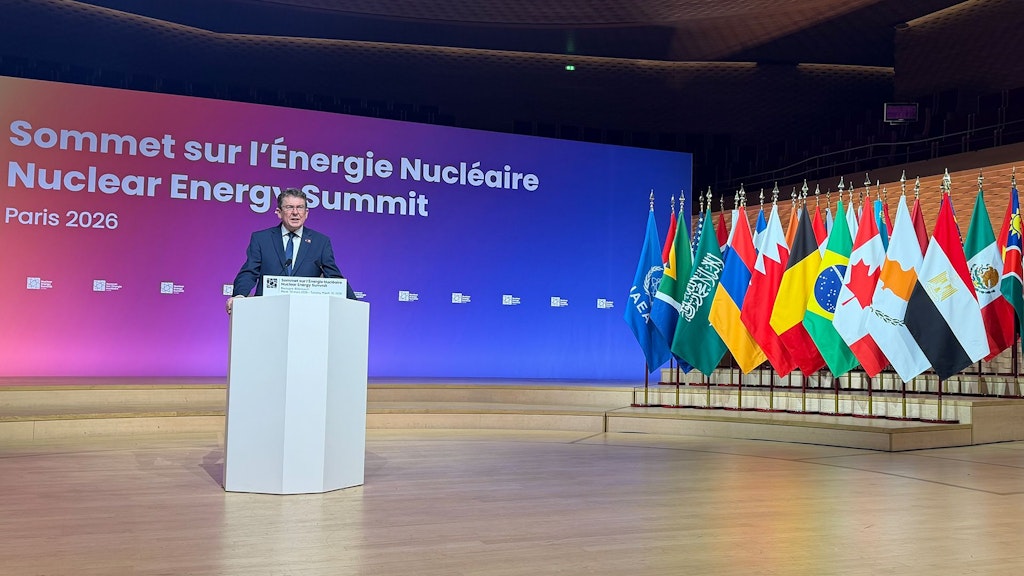
At the invitation of French President Emmanuel Macron, heads of state and government, leaders of international organisations and financial institutions, industrialists and experts gathered in Paris on 10 March for the second Nuclear Energy Summit. The summit was organised in close collaboration with the International Atomic Energy Agency (IAEA).
Discussions focused on the role of nuclear power in the energy transition, financing conditions for nuclear projects, innovation and next-generation technologies. Other topics addressed at the event included fuel supply security, radioactive material and waste management, and the development of the skills and supply chains needed to build and operate the facilities.
Role of nuclear energy in decarbonisation and security of supply
Mr Rösti said: “Security of supply is essential for our country. In the context of decarbonisation and rising demand for electricity, nuclear energy is an important pillar of low-carbon energy systems. It provides safe and readily available electricity.” He continued: “With a view to the long-terme operation of our existing nuclear power plants, we reaffirm our commitment to ensuring the safe, secure and sustainable management of radioactive waste and its disposal, in particular its deep geological disposal.”
International cooperation and technological openness
Mr Rösti emphasised the importance of international cooperation for Switzerland, while respecting national sovereignty. “This cooperation allows Switzerland to remain open to different technologies in order to secure the country's long-term energy supply,” he concluded.